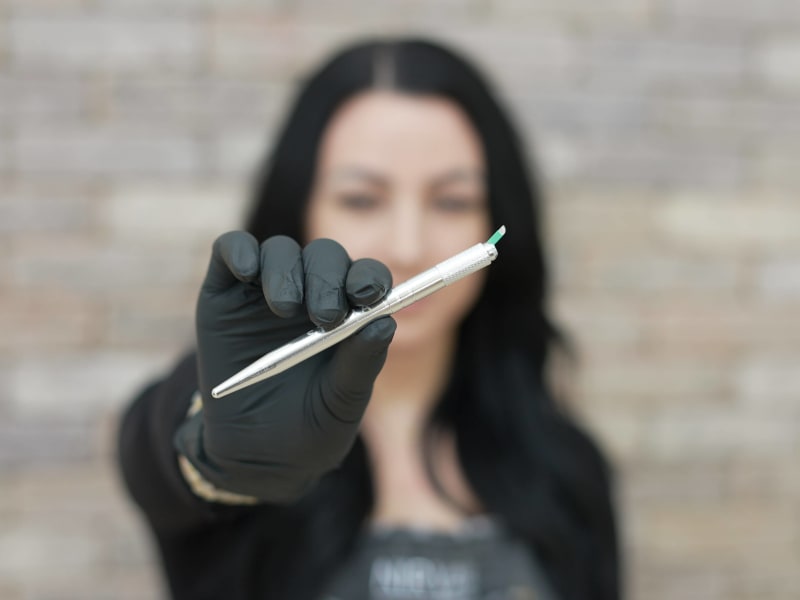
What Do Healed Microblading Results Actually Look Like?
Healed microblading results should look like natural brow hairs—individual strokes that match your hair color, sit in the direction real brow hairs grow, and have the slight variation in thickness and length that real hair has. Color should look warm and soft, not dark and crisp. The overall impression should be that you simply have great natural brows, not that you had work done.
Here is something I tell every client who comes in for a consultation: bring photos of results you love, and tell me what you like about them. But first, let me teach you how to actually read before-and-after photos—because a lot of what gets posted online is designed to impress, not inform.
After 10 years and over 3,500 treatments, I’ve seen how misleading microblading photos can be. Understanding what you’re actually looking at changes everything about how you evaluate an artist’s work.
The Problem With Most Microblading Photos
The majority of microblading before-and-after photos you see—on Instagram, on artists’ websites, on Google—show fresh work. Same-day results. The brows as they look minutes or hours after the appointment.
Here’s the thing about fresh microblading: it always looks impressive. The color is dark and saturated, the strokes are crisp, the shape is clean. It photographs beautifully.
But fresh results are not final results.
Over the next 4-6 weeks, fresh microblading goes through a significant healing process. The color fades to 40-50% of its initial intensity. The strokes soften. Some areas retain better than others. The final healed result looks nothing like the fresh result—and that’s completely normal. It’s by design.
The test of a microblading artist’s skill isn’t how the fresh work looks. It’s how the healed work looks.
When the strokes have softened and the “fresh work” look is gone—do they still look natural? Does the color look balanced and warm? Do the strokes blend seamlessly with the client’s existing brows? That’s what you should be evaluating.
How to Find and Read Healed Results
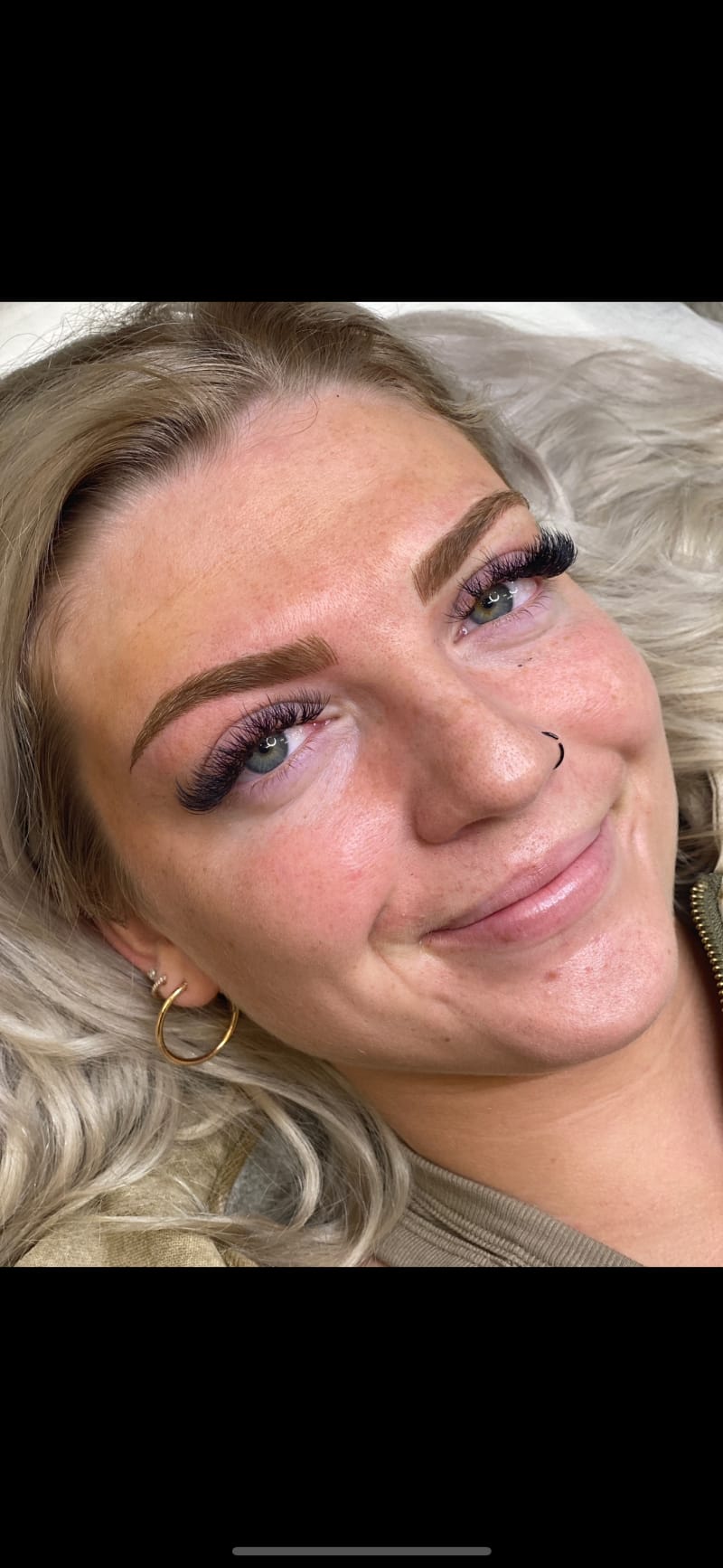
Specifically Ask to See Healed Photos
When looking at any artist’s portfolio, ask directly: “Can you show me healed results? Photos at 4-6 weeks, or 6-month follow-up shots?”
A qualified artist with real healed results will show you without hesitation. If someone hedges, says they “don’t usually photograph healed results,” or shows you healed results where the brows look as dark and crisp as fresh work—those are both red flags.
My before and after results page shows healed microblading on real clients with real skin. That’s the standard I hold myself to, and it’s the standard you should hold any artist to.
Look for These Signs of Good Healed Results
Color warmth and softness: Healed microblading should look soft—think “pencil sketch” softness, not “fresh pen ink” sharpness. The color should look warm, matching the client’s natural hair tone without pulling orange, gray, or ashy.
Natural stroke variation: Real brow hairs aren’t all the same. They vary in length, thickness, and direction. Good microblading mimics that variation so each stroke looks like an individual hair, not a printed pattern.
Shape that fits the face: The brow shape should look like it was designed for that specific client’s face—not a generic arch imposed on everyone. The right shape for one person is wrong for another.
Believable density: Microblading adds structure and definition, but it shouldn’t look like a brow drawn with a marker. Healed results should look like you happen to have fuller, more defined brows—not like you filled them in.
Seamless blending: Where existing brow hairs meet microbladed strokes, you should barely be able to tell which is which.
What Raises Questions in Healed Photos
These don’t automatically mean bad work, but they’re worth noting:
- Strokes that look blurry or spread out — Could indicate the artist worked too deep, or the client has oily skin that wasn’t well-matched to the technique
- Color that looks gray, ashy, or orange — May indicate pigment choice issues or aging (if the photo is older)
- Shape that looks the same on every client — Good artists customize shape; if every result looks like the same brow template, that’s worth questioning
- Very few healed examples — Doesn’t mean bad work, but limited data means you can’t see a pattern
What Realistic Microblading Results Look Like: Setting Honest Expectations
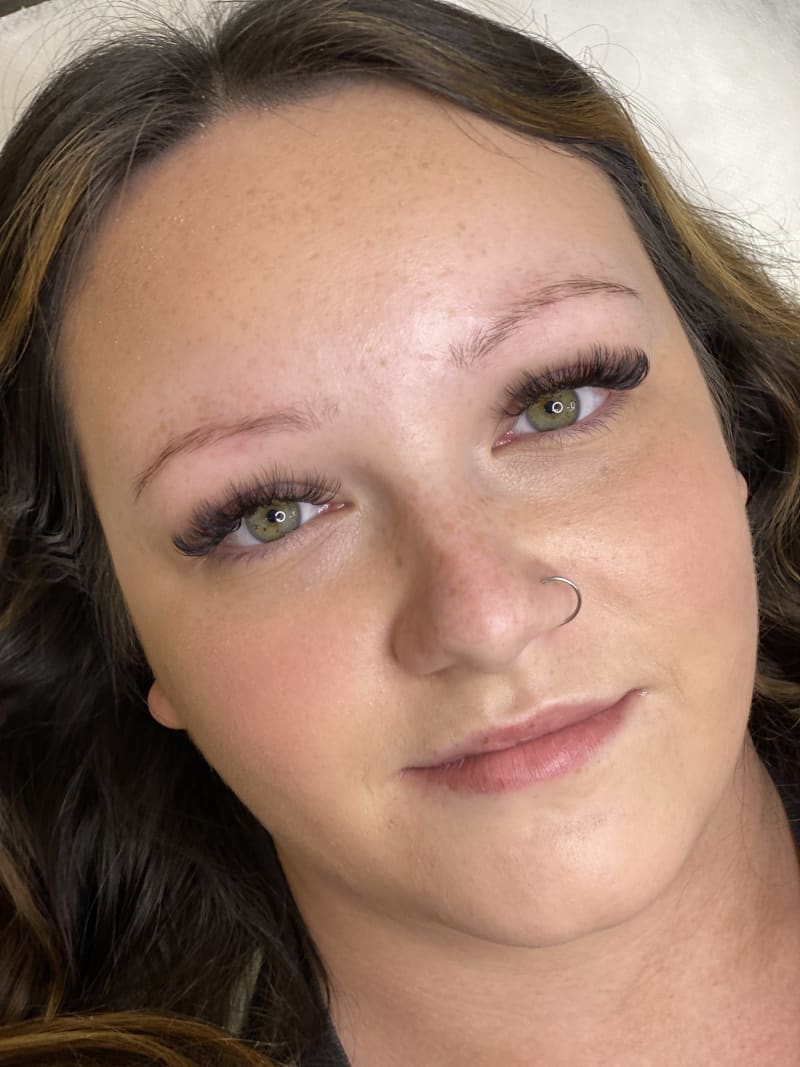
I want to be straightforward about what microblading can and can’t do.
What Microblading Does Well
Filling in sparse brows. If you have naturally sparse brows—genetics, over-plucking, aging—microblading adds individual hair strokes that make your brows look full and defined. On clients with some existing hair, the strokes blend with natural hairs seamlessly.
Creating structure where there isn’t any. If your brows have no defined shape, microblading gives them one. The right shape literally changes how your face looks—it’s one of the most impactful cosmetic treatments available.
Replacing brows lost to medical conditions. For clients who have experienced brow loss from alopecia, thyroid conditions, chemotherapy, or trichotillomania, microblading can restore the appearance of natural brows in a way that nothing else really replicates.
Saving time. The daily brow makeup routine—pencil, powder, pomade, setting—disappears. You wake up with brows. For clients who spend 15-30 minutes on brows every morning, this is significant.
What Microblading Has Limits On
Very oily skin. Oily skin can cause microbladed strokes to spread slightly or fade faster than on dry skin. This doesn’t mean microblading is impossible on oily skin—but expectations need to be managed, technique may need to be adjusted (combination brows or nano brows often work better), and more frequent refreshes may be needed.
Very damaged or scarred skin. Previous cosmetic tattooing, significant scarring, or certain skin conditions affect how microblading retains. I can work with most of these situations, but I always assess during consultation first.
Completely replacing all brow makeup for everyone. Most clients who get microblading stop needing daily brow makeup. But if you’re someone who fills in your brows very heavily as part of your makeup routine, microblading gives you a natural foundation—it doesn’t automatically give you a full, bold makeup brow unless that’s specifically what we design.
Looking identical on different skin tones. Pigment color behaves differently on different skin tones. What looks warm and natural on fair skin might look slightly different on deeper skin. I choose pigment colors specifically for your skin tone and undertones, which is part of why a consultation matters.
The Difference Between Good and Great Results
Good microblading looks natural and well-executed. Great microblading is invisible—nobody can tell.
The difference usually comes down to:
Brow mapping and design. Before I pick up any tool, I spend significant time measuring and mapping your brow shape using your facial features as a guide—the golden ratio proportions of your face, where your brow naturally starts and ends, your arch position. The map is drawn in pencil first. You approve it. Then we begin.
Stroke placement and direction. Every stroke I make follows the natural growth direction of your brow hairs. This is what creates the “real hair” illusion. Strokes placed at the wrong angle immediately read as artificial.
Pigment selection. The color needs to match your hair, your skin undertone, and account for how that specific pigment will heal on your specific skin. I don’t use the same color on everyone.
Depth consistency. Working at consistent depth throughout the brow is what creates even retention. Too shallow in some spots, too deep in others, and you get patchy healing that can’t be fully corrected at touch-up.
This is why 10 years of focused experience matters. Not because the first year wasn’t good work—it was—but because pattern recognition across thousands of treatments builds an instinct you simply can’t shortcut.
How to Use the Before-and-After Gallery
When you look at my results page, here’s how to get the most out of it:
Find clients with similar brow challenges to yours. Sparse brows, over-plucked brows, uneven brows, brow loss from medical conditions—look for situations that match yours and see how they healed.
Notice the variety. Good results on different skin tones, different natural brow densities, different face shapes. If everything looks the same, that’s a template problem.
Look at the “before” brows critically. Does the “after” look like an improvement that’s realistic for your starting point? Not every sparse brow becomes full and lush—microblading works with what’s there.
Ask questions. If you see a result you love and want to know if your skin and brows can achieve something similar, ask me during consultation. I’ll give you an honest answer.
What to Bring to Your Consultation
If you’ve been saving reference photos, bring them. Photos of brows you love — even if they’re on someone with a completely different face — help me understand what aesthetic resonates with you. I’ll look at your references alongside your bone structure, existing brow hair, and skin type to find the overlap between what you want and what will actually work.
Don’t worry about finding the “perfect” reference photo. The value is in conversation — you point to what you’re drawn to, I explain what’s achievable and what adjustments I’d make for your face. That back-and-forth is where the real design happens.
Come with a clean face in the brow area (no pencil, no tint). I need to see your natural brow hair pattern and skin clearly to make accurate recommendations.
The Timeline: What Results Look Like Over Time
Before and after photos are typically taken at two points: immediately after the appointment, and after full healing at 6-8 weeks.
Immediately after — brows look bold and dark. This is not the final result. Fresh pigment combined with swelling and redness always makes the brows appear more intense than they’ll end up. If you see before/after photos labeled “same day,” keep this in mind.
At the touch-up (6-8 weeks) — this is when the true result is visible. Pigment has settled, strokes have softened to their natural tone, and any areas that healed lighter have been addressed. This is the result that lasts.
At 12-18 months — gradual fading begins. Brows look softer, lighter, more lived-in. Many clients find they prefer this stage — it’s extremely natural. An annual refresher ($300 at my studio) restores the original crispness.
Ready to See What’s Possible for Your Brows?
Browse the results gallery to see healed microblading on real clients across different skin types and brow situations. Then, when you’re ready to talk about what’s realistic for your face specifically, book a free consultation.
I look at your existing brows, your skin type, your lifestyle, and your goals before recommending anything. If microblading is the right fit, we plan exactly what your results can look like. If something else would serve you better, I’ll tell you that too.
Natural is non-negotiable. The right shape changes everything.
I’m based in Shorewood, IL, and work with clients from across the southwest suburbs—Naperville, Joliet, Plainfield, Oswego, and beyond. Questions about what microblading could look like on your specific brows? Contact me and I’ll give you an honest answer.