What Are Nano Brows vs Microblading?
Nano brows use a digital machine with a single ultra-fine needle to create individual hair strokes pixel by pixel, while microblading uses a handheld manual blade drawn by hand. Both create realistic-looking brow hair strokes, but the tool, technique, healing process, and ideal skin type differ in ways that matter when you’re choosing between them.
I get this question constantly: “Which is better—nano brows or microblading?” The honest answer is that neither is objectively better. They’re just different tools that suit different skin types, different goals, and different preferences. The right one depends on YOUR situation.
I’ve been doing both techniques for over 10 years across 3,500+ treatments. I’ve seen when each one shines and when each one falls short. Let me break it down so you can make an informed decision—not just trust whatever an artist happens to specialize in.
How Each Technique Works
Microblading
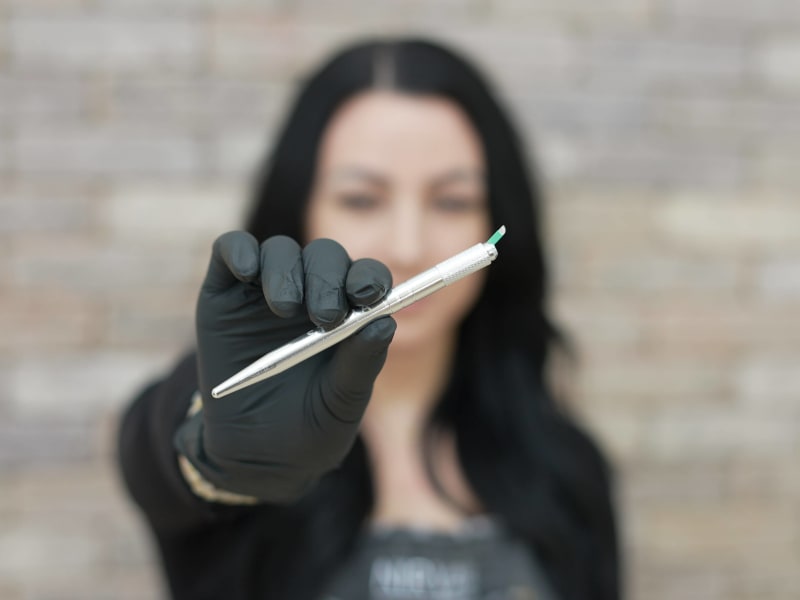
Microblading uses a handheld tool—a small row of ultra-fine needles attached to a handle, essentially forming a tiny blade. I draw each stroke manually, one at a time, with my hand. There’s no machine involved.
Each stroke is a deliberate, individual decision about pressure, angle, and depth. The result is hair strokes that can look almost artistic in their variation—slightly different lengths, curves, and widths that mimic the randomness of real brow hairs.
The depth is controlled by my hand pressure, which is what requires serious skill. Too shallow and the pigment won’t retain. Too deep and strokes blur and spread. It takes years of practice to consistently hit the right depth across different skin types.
Nano Brows
Nano brows (also called nano needling or digital microblading) use a PMU machine—essentially a digital device that drives a single, extremely fine needle up and down at a controlled speed and depth. Instead of drawing a stroke all at once, I tap the pigment into the skin point by point, creating a stroke made of tiny dots.
The machine controls depth consistently, which is both its advantage and its limitation. You lose a tiny bit of the hand-drawn organic quality, but you gain precision and consistency—especially on tricky skin types.
The Critical Factor: Skin Type

This is where the decision often gets made.
Microblading Works Best For
- Dry to normal skin — Less sebum means pigment retains cleaner and strokes stay crisp
- Mature skin with some texture — Manual strokes can work with natural skin character
- Normal pore size — Large pores can cause microblading strokes to spread or blur
- First-timers who want classic results — The gold standard technique for a reason
Nano Brows Work Better For
- Oily or combination skin — The machine deposits pigment more consistently despite excess sebum
- Sensitive skin — Less manual trauma, more controlled depth
- Anyone who had poor microblading retention — If your microblading faded in 6 months, nano may hold longer
- Thin or delicate skin — Machine precision reduces risk of over-working the skin
If you have oily skin and had microblading done elsewhere that healed too light or disappeared quickly, there’s a good chance nano brows would retain significantly better for you. This isn’t a failure of your previous artist—it’s skin chemistry.
How They Look: Same Goal, Slightly Different Character
Both techniques create individual hair strokes that look like real brow hairs. The differences are subtle but real.
Microblading strokes tend to look slightly more organic and hand-drawn. Because I’m controlling every stroke manually, there’s natural variation in each line—the way a real brow hair isn’t perfectly identical to the one next to it. For clients who want the most natural, almost artless result, microblading often delivers that when done well.
Nano brow strokes tend to look slightly more precise and defined. The machine creates consistent, clean lines. This can look very natural too—but it has a different character. Some clients prefer this because the definition gives a polished, put-together look even if they have minimal existing brow hairs.
Either way, my standard is the same: brows that look like they were born there. I do one thing—and I do it exceptionally well. Whether I’m holding a handheld blade or a machine, every stroke is placed where it belongs for YOUR face.
Healing: What to Expect From Each
The healing process is similar for both, but with notable differences.
Microblading Healing
- Days 1-4: Brows look dark and bold—expect 40-50% darker than the final result
- Days 5-10: Flaking and itching. DO NOT pick.
- Days 10-21: Ghosting phase—strokes can look almost invisible as new skin covers the pigment
- Weeks 4-6: True final color emerges
The microblading healing process tends to involve slightly more visible peeling because the manual strokes create slightly more surface trauma.
Nano Brows Healing
- Days 1-4: Brows look bold but typically a bit less dramatic than microblading initially
- Days 5-10: Lighter peeling—nano often produces less surface scabbing
- Days 10-21: Similar ghosting phase
- Weeks 4-6: Final result visible
Nano brows generally heal with slightly less visible peeling and a marginally smoother healing experience—not dramatically different, but noticeable.
One thing is the same: you need a touch-up at 6-8 weeks regardless of which technique you choose. The touch-up is part of the process, not a sign something went wrong.
Pricing: What to Expect
Pricing varies by artist and location, but here’s the realistic picture:
| Microblading | Nano Brows | |
|---|---|---|
| Initial session | $400-600 | $400-700 |
| Touch-up (6-8 weeks) | Usually included or $100-200 | Usually included or $100-200 |
| Annual refresh | $250-400 | $250-400 |
| Longevity | 1-2.5 years | 2-3 years |
The longer longevity of nano brows sometimes makes the slightly higher price make sense, especially if you’re on oily skin and have had retention issues with microblading.
At my studio in Shorewood, I’ll recommend the right technique for your skin during consultation—I’m not going to default to whatever’s easier for me.
Durability: Which Lasts Longer?
Nano brows typically last 6-12 months longer than microblading on the same skin type. The machine’s controlled depth creates more consistent pigment deposit, which tends to hold better—especially on skin types that give microblading trouble.
Here’s the realistic breakdown:
Microblading longevity:
- Dry/normal skin: 18-30 months before a refresh
- Oily skin: Often 12-18 months (sometimes less)
- With proper SPF and skincare: Up to 3 years
Nano brows longevity:
- Dry/normal skin: 2-3 years before a refresh
- Oily skin: Often 18-24 months (significantly better than microblading)
- With proper SPF and skincare: Up to 3.5 years
The biggest variable in both cases? Sun exposure. UV rays are pigment’s worst enemy—SPF on your brows every single day does more to extend the life of your results than anything else.
My Honest Recommendation
If you have normal to dry skin and want the most organic, hand-drawn hair stroke result: microblading.
If you have oily or combination skin, have had microblading that didn’t retain well, or prefer a machine technique: nano brows.
If you’re genuinely not sure: book a consultation. I look at your skin type, your existing brows, your lifestyle, and your goals before recommending anything. Choosing the wrong technique for your skin doesn’t just waste money—it wastes healing time.
Both techniques, when done correctly, produce results that look like they were born there. The technique is the vehicle. The skill of the artist is what actually determines the outcome.
Making Your Decision
The best thing you can do is come in for a consultation before committing to either technique. I’ve converted plenty of clients from microblading to nano brows (and vice versa) based on what their skin actually showed me.
For anyone looking for eyebrow microblading near me, this choice between techniques is worth understanding before you book — the right one for your skin type makes a real difference in how long your results last.
A few questions to think about before we meet:
- How oily is your skin in the brow area? If you’re constantly blotting or your brow pencil slides off within hours, nano brows may hold better.
- What aesthetic do you prefer? Ultra-fine individual strokes that look like real hair? Or slightly more defined strokes with more staying power?
- Have you had previous brow work? If you have existing microblading that’s faded, the approach for a touch-up may differ from starting fresh.
- What’s your skincare routine? Retinols, glycolic acids, and other actives affect both techniques differently. I’ll ask about this at consultation and give you specific guidance.
Don’t stress about having all the answers. The consultation is designed to gather this information together — I assess your skin in person and tell you exactly which approach I’d recommend based on what I see, not what I assume.
Browse real before and after results to see healed examples of both techniques on real clients with real skin. Then book a free consultation — I’ll tell you exactly which technique I’d recommend for your specific face, and why.
The right shape changes everything. The right technique ensures it stays there.
Have questions about which technique is right for your skin? I answer every message personally—contact me and tell me about your skin type and what you’re looking for. I’m based in Shorewood, IL, and work with clients from Naperville, Joliet, Plainfield, and across the southwest suburbs.